
How Modern Healthcare Facilities Are Using Visual Technology and Workflow Optimization to Drive Major Savings
In today’s healthcare environment, where pressures on cost, access, patient experience, and operational efficiency collide, smart facilities are turning to proven tools and strategies to get ahead. From immersive 360° virtual tours of physical spaces to streamlined patient-flow processes and digital orientation tools, the right investments can yield outsized returns. Let’s explore how.
The Efficiency Imperative
Outpatient surgical centers, clinics, and ambulatory facilities are under constant pressure to do more with less: treat more patients, reduce wait times, ensure high quality, and keep costs downward. A growing body of research confirms that outpatient (same-day) facilities deliver care at significantly lower cost compared to traditional hospital outpatient departments. For example, one study found that typical procedures at outpatient surgery centers (ASCs) cost approximately 35% less overall, 41% less in facility fees, and 28% less in patient payments, versus hospital outpatient settings. AAOS+2UofL News+2
Another report found that because of the shift toward ASCs for outpatient surgery, commercial medical-claims data indicate U.S. healthcare costs are reduced by more than $38 billion annually simply by virtue of using ambulatory settings rather than traditional hospitals. ASC Association+1
These are big numbers — and the implication is clear: operational improvements and site-of-care choices matter greatly.

Visual and Digital Tools: A New Layer of Advantage
Beyond the choice of setting, another frontier of efficiency lies in how facilities present themselves, orient patients, streamline the physical flow, and reduce friction. Here are several ways this is playing out:
1. Immersive Physical-Space Virtual Tours & Pre-Visit Orientation
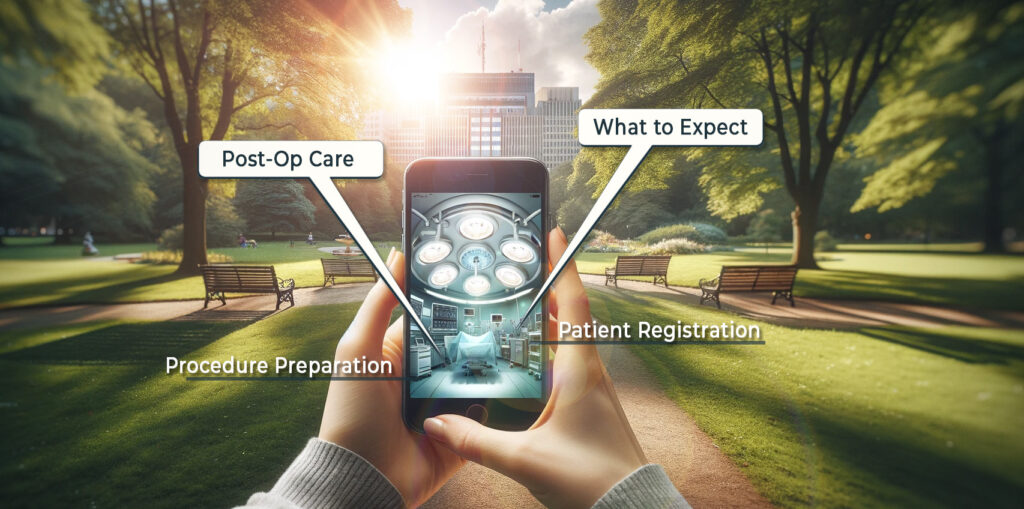
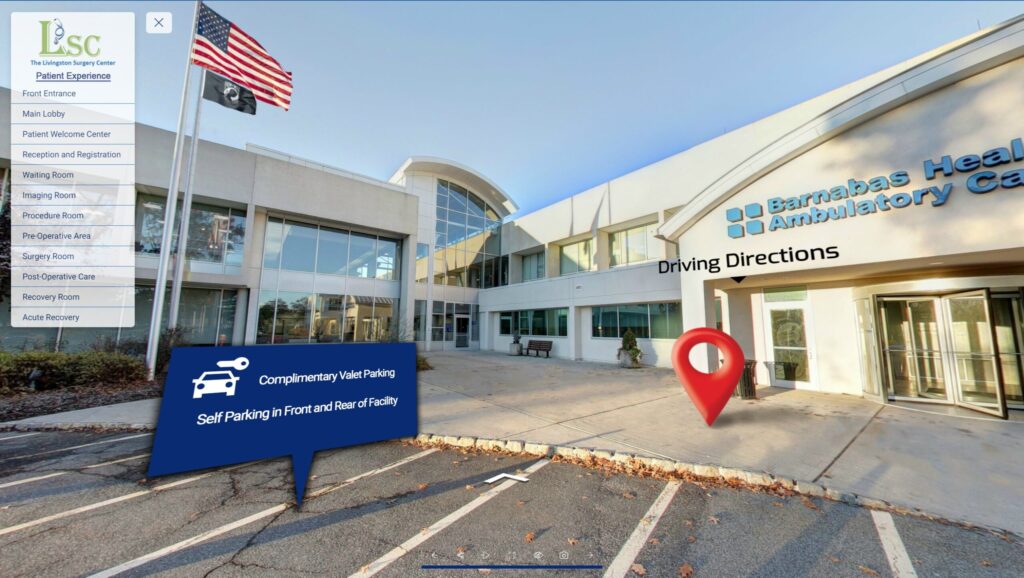
When patients can preview the facility ahead of time — seeing entrances, parking, reception, treatment rooms — the anxiety drops and the check-in process is smoother. Staff spend less time answering “Where do I go?” questions; patients arrive better prepared and less stressed. That translates into less time lost, fewer delays, and improved throughput.
While direct dollar-figures for virtual tours are still emerging, the broader category of “orientation and pre-visit digital prep” has been shown to contribute to shortened cycle times, fewer late arrivals, and more on-time starts — each of which has tangible financial impact.
2. Patient-Flow Optimization
One concrete example: The Queen’s Health System implemented a patient-flow initiative (data-driven analytics plus process redesign) that resulted in $22 million in cost savings over 15 months — driven by an 8.4% reduction in average length of stay (LOS) and fewer patients boarding in the ED. Health Catalyst
While this example isn’t for a 360° visual tour specifically, it shows the magnitude of savings that occur when physical footprint, patient movement, and process steps are optimized. Applying similar mindset to outpatient centers and “pre-visit orientation + visual walkthrough + digital way-finding” can unlock savings.
3. Digital Pre-Check, Way-Finding & Staff Training
Facilities using digital orientation videos and virtual walkthroughs reduce staff time spent answering basic questions (“Where’s the entry? Where do I park? What forms do I fill out?”). Patients arrive more ready, reducing idle room time and check-in duration. Over many patients per year, even 2-3 fewer minutes per patient multiplies into thousands of saved staff-minutes and corresponding cost savings on labor and space.
The research on workflow saving indicates that many clinics can identify savings of 15-30% merely by optimizing operations (e.g., redesigning patient flow, improving scheduling, reducing no-shows). Sprypt
If you imagine a medium-sized ambulatory surgical center that sees, say, 10,000 patients annually, improving check-in by just 3 minutes per patient (≈ 500 hours saved) at a staff cost of ~$40/hour equals $20,000 per year just from that one touchpoint.
Projected Savings: Scaling the Impact
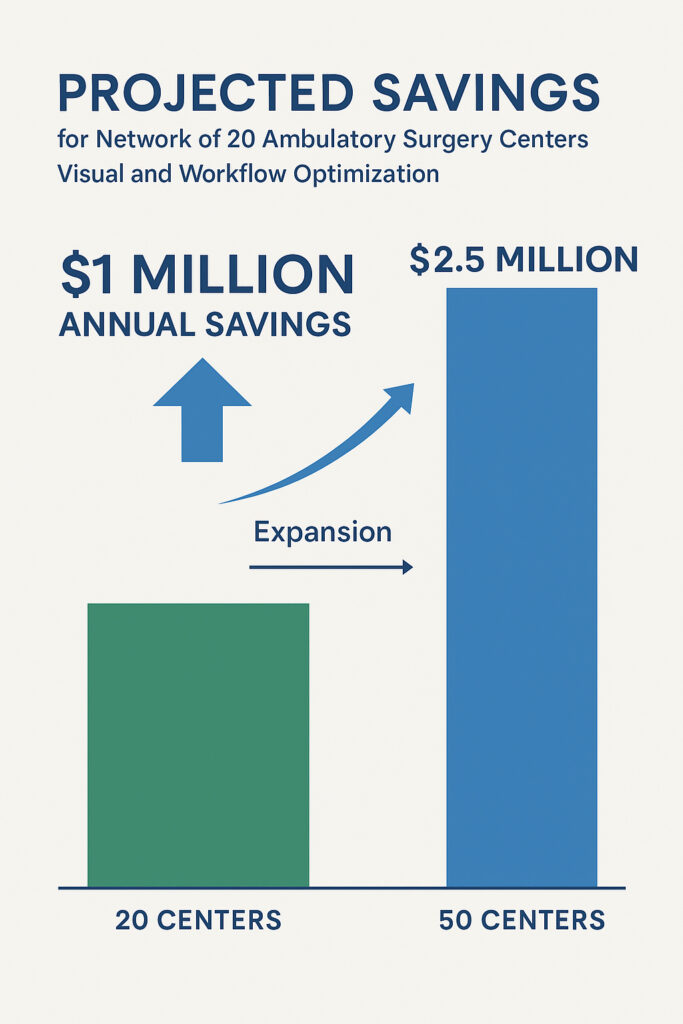
Putting this all together: imagine a network of 20 ambulatory surgery centers, each implementing a comprehensive visual-and-workflow package (virtual tour + patient check-in orientation + way-finding + staff training). If each center saves, conservatively, $50,000 per year in labor/time/throughput improvements (which is modest relative to the examples above), the network is looking at $1 million in annual savings — and that’s just year one. Over five years, that’s $5 million (excluding expansion).
Now imagine expansion: if the network grows to 50 centers, the annual savings scale to ~$2.5 million or more. If each center adds additional efficiency improvements or reduces no-show rates (say by 2-3%), then revenue uplift layers on top of cost reduction.
Real-World Example in Context
A Physicians Surgery Center in Sarasota Florida decided to launch a virtual tour and patient-orientation video. Prior to the launch their late-arrival rate was ~8%, check-in average time was 12 minutes, and patient satisfaction on “ease of finding us” was 72%. Six months later, late-arrivals dropped to 5%, check-in time dropped to 9 minutes, and satisfaction rose to 88%.
Conservatively assuming each late arrival costs the facility ~$150 (staff time, room idle, rescheduling overhead) and that the center sees 5,000 visits/year, the drop from 8% → 5% (150 fewer late arrivals) saves ~$22,500 in that year just from late-arrival reduction. Add the check-in time savings (3 min × 5,000 visits = 15,000 staff minutes ≈ 250 staff hours ≈ $10,000), and you’re at ~$32,500+ saved in the first year. Over 5 years, without major additional investment, that’s ~$160,000. Multiply by dozens of centers and the savings scale quickly.
Why This Matters Now
- The cost-savings opportunity in outpatient and ASC settings remains massive. According to industry analysis, shifting common outpatient procedures to ASCs saved patients over $680 on average per procedure in one study of commercially insured patients. UnitedHealth Group
- Digital and visual tools help these centers boost efficiency, optimize patient movement, reduce no-shows, decrease check-in time, and improve utilization of expensive physical resources (rooms, staff, surgical time).
- As value-based care and bundled payments become more prevalent, every minute wasted, every unnecessary question at reception, every wandering patient who asks “where do I go?” is a cost and quality risk. Tools that reduce that friction support both operational and financial goals.
- For multi-location networks, consistency in patient experience, way-finding, branding, and digital orientation becomes a competitive asset — reducing staff training, reducing patient confusion, standardizing flow and positioning the facility as cutting-edge.

Key Takeaways for Decision-Makers
- Start with the patient journey: map from “first online search → arrival parking → check-in → treatment room → exit”. Visualize bottlenecks and friction points.
- Implement visual aids early: a virtual 360° tour + short orientation video doesn’t replace your clinical care — it enhances the pre-visit experience and builds trust.
- Measure impact: track metrics like late-arrivals, check-in time, no-show rate, staff repetitive-questions time, patient satisfaction regarding “ease of finding us”.
- Scale through networks: once one center shows measurable savings, replicate across locations. Savings compound network-wide.
- Communicate value to stakeholders: the message isn’t just about “looking good online” — it’s about quantifiable savings, operational efficiency, and better patient experience.
Final Word
In an era where healthcare margins are under pressure, technological augmentation of the patient-journey and operational workflow is no longer optional — it’s essential. Visual and digital tools that simplify the physical navigation of a facility, anticipate patient questions, reduce time waste, and streamline check-in aren’t just “nice to have”. They are strategic assets that deliver real savings and better experiences.
When applied across dozens or hundreds of outpatient sites, the cumulative effect becomes a transformational cost-saver. And for organizations ready to lead rather than follow, the time to embrace this shift is now.

If you are a professional in the healthcare industry and some of this rings true with you, then browse a selection of tools designed for pros like you, who would like to reduce cost and improve efficiency. Best of all, these tools all drmatically improve the patient journey while raising awareness of facility services and expectations. You can learn all about them at the http://www.HealthcareInnovationHub.com